 Contact
Menu
For the technically curious
For the Nerds.
A serious, public-safe look at the energy conditioning, supervisory computing, lighting automation, connected controls, and security boundaries behind our development program.
PUBLIC TECHNICAL LAYERArchitecture visible.Implementation protected.PUBLIC BOM · NO PROTECTED VALUES · NO RECONSTRUCTABLE TOPOLOGY
Disclosure boundary
Deep enough to understand.
Not enough to reproduce.
This page explains functional relationships and engineering intent. Exact capacitance, winding geometry, chemistry, switching sequences, component relationships, firmware, security keys, and manufacturing tolerances remain protected intellectual property of Magna Power Innovations Corporation.
01 · Energy conditioning
A hybrid network, organized by function.
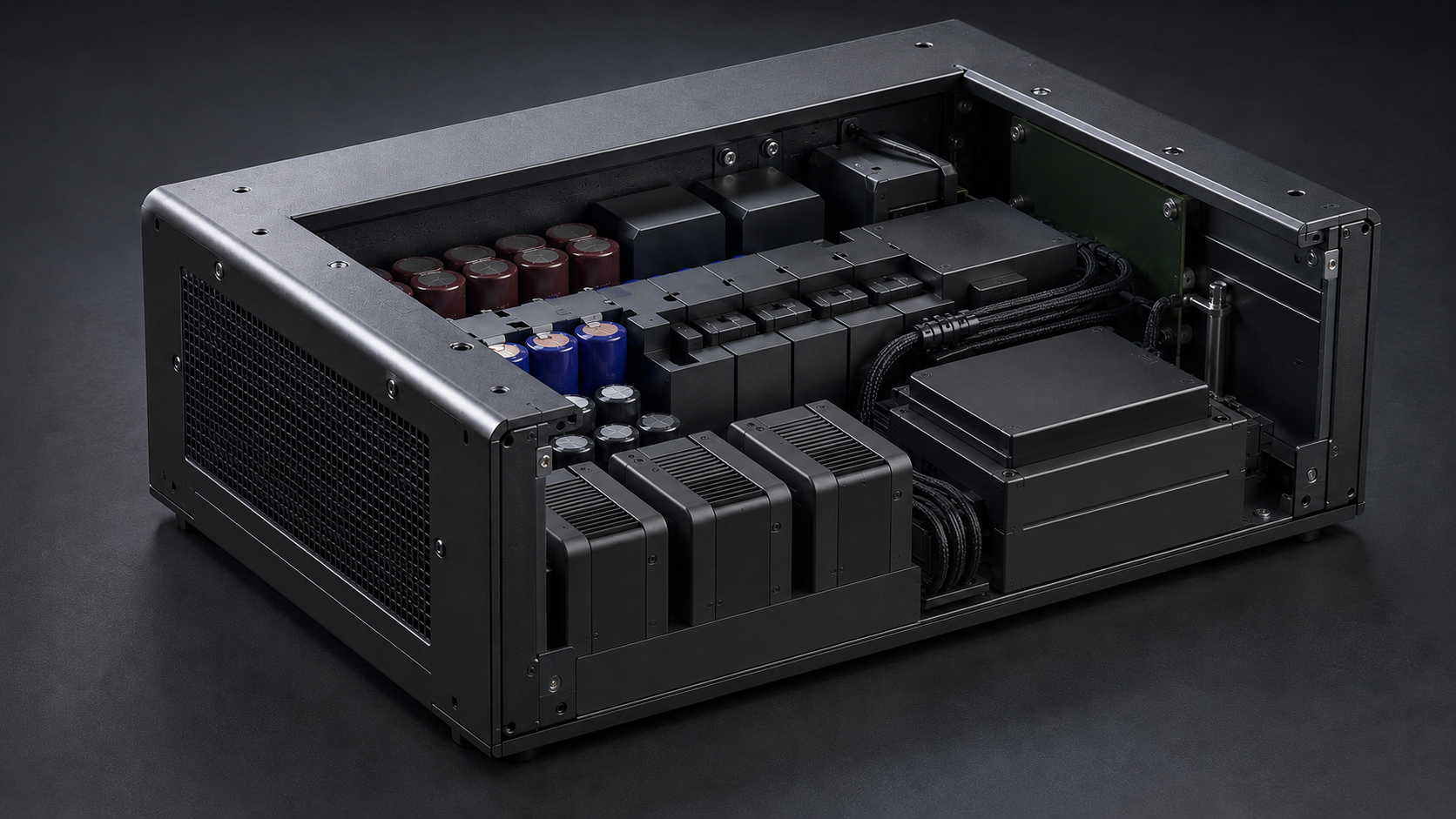
The generator interface is treated as an energy-conditioning problem rather than a single-capacitor problem. Bulk capacitance supports slower energy changes, film capacitance responds to faster transients, and inductive coil elements help shape ripple and isolate high-frequency noise. Monitoring occurs across the conversion boundary so the controller can react to state—not guess at it.
Public description: functional capacitor and coil classes only. Exact values, ratios, arrangement, switching, and materials are intentionally withheld.
Capacitance trade space
Why hybridize—and what it costs.
A larger capacitance number by itself does not guarantee a better system. The useful question is whether each storage and filtering element is suited to the time scale, ripple, temperature, voltage stress, and control objective it serves. The hybrid approach combines complementary behaviors rather than asking one capacitor technology to do every job.
The comparison below is qualitative engineering intent—not laboratory data, certified performance, or a claim of net energy creation.
Faster transient support
Film and local decoupling stages can react to rapid bus disturbances while the bulk layer addresses slower energy movement.
More design complexity
Multiple energy-storage behaviors require coordinated protection, sensing, layout, thermal analysis, and validation.
Lower ripple exposure
Inductive and capacitive elements can divide filtering work, reducing the stress placed on any single component class.
Resonance must be controlled
Coils, capacitance, wiring inductance, and switching can create unwanted resonant behavior if damping and control are inadequate.
Better observable state
Distributed sensing gives the supervisory computer a clearer picture of bus, thermal, charge, and fault conditions.
Losses and aging remain
ESR, leakage, conversion loss, heating, component tolerance, and lifetime drift must be measured—not assumed away.
Hybrid functional networkSingle-mode baseline
Functional schematic
The machines remain independent. The controller understands the system.
PRIME MOVERDrive motorIndependent machine state
MECHANICAL TRANSFER
GENERATIONGeneratorIndependent electrical output
CONDITIONED ENERGY
APPLICATIONLighting / loadDemand-controlled output
SUPERVISORY LAYERIoT controllerObserves sensors · applies deterministic states
TELEMETRY
TELEMETRY
CONTROL
The motor and generator do not exchange software messages or “know” one another. Each operates within its own physical domain. Sensors convert observable conditions into evidence; the supervisory computer evaluates that evidence and commands only the permitted interfaces.
Baseline graphs
Conceptual response, not measured performance.
Normalized plots show the intended behavior of the control architecture. They communicate relationships without publishing protected operating values.
Illustrative only. No voltage, frequency, capacitance, or efficiency claim is represented.
Actual switching includes debounce, health checks, time policies, and safe fallback states.
02 · Three-phase power control
From hand-built proof board to production architecture.
The original prototype establishes the functional lineage: discrete film capacitors, gate-drive devices, power semiconductors, supporting resistors and diodes, terminal interfaces, and a three-phase controller. The production concept reorganizes those functions into separated power and logic zones with repeatable thermal paths, isolation, serviceable connections, and monitored phase channels.
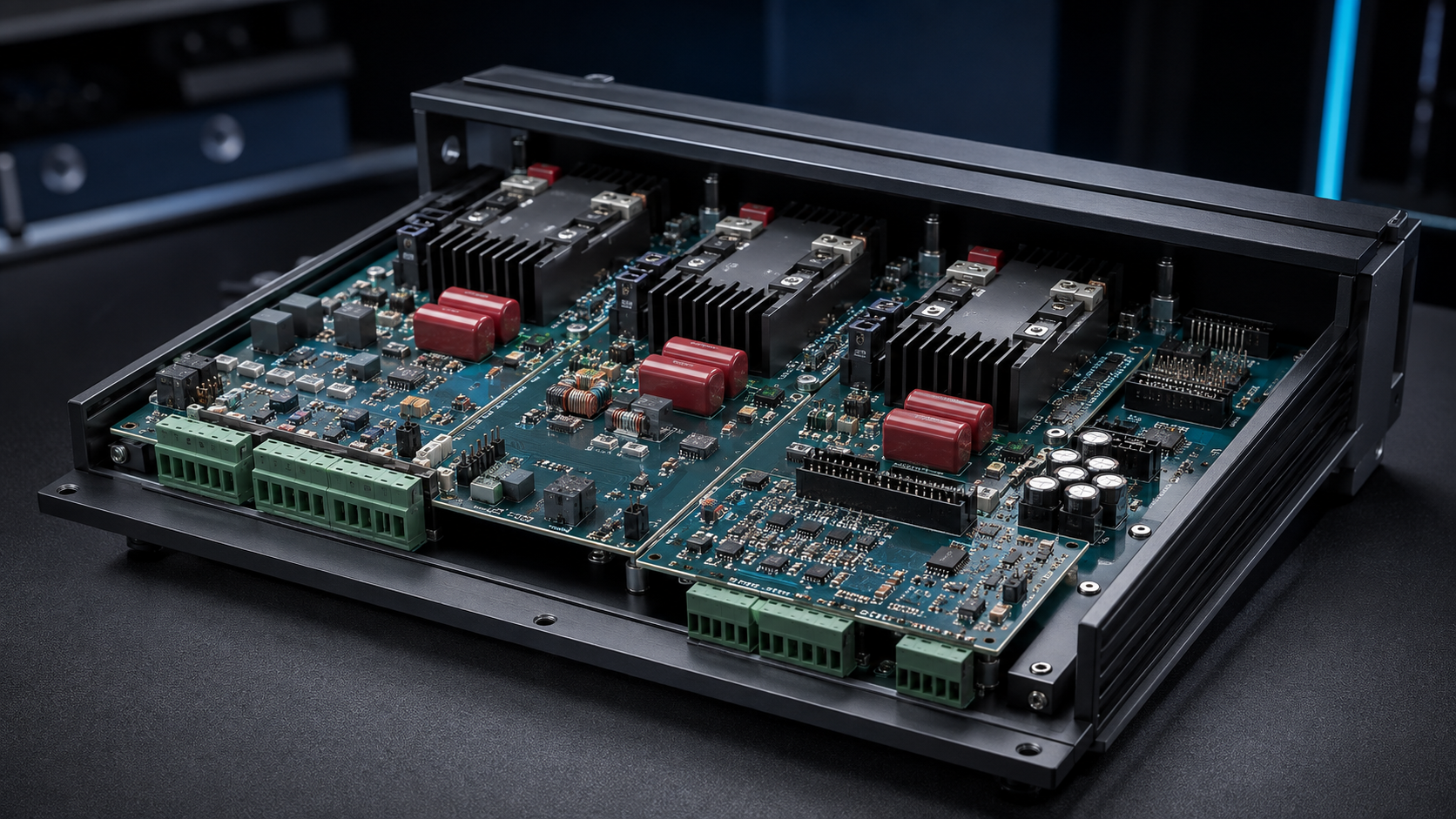
01CommandThree-phase waveform and permitted state
02Gate driveIsolated high-side and low-side switching
03Power stageThree monitored semiconductor channels
04Conditioned outputProtected application interface
Public build of materials
The components we can discuss.
This is a public engineering inventory, not a construction recipe. It identifies development components and their functional roles while withholding quantities, protected ratings, PCB routing, phase relationships, firmware, and assembly sequence.
SubsystemPublic componentsRole
Generation & conversionAPS 4260 generator platform · XD-3420 12/24V development motor · MDS100A1600V rectifierMechanical generation, rectification, and conversion-boundary research
Three-phase controlEGS032 / EG2132 controller platform · three IR2110 high/low-side gate-driver channelsWaveform command, phase coordination, and protected switching control
Power stageIRFP460 development MOSFET bank · UF4007 fast-recovery diodes · isolated heatsinkingControlled power switching, recovery paths, and thermal management
ConditioningWIMA film capacitors · Nichicon bulk electrolytics · GreenCap supercapacitor development bridge · ceramic decouplingTransient response, bus energy buffering, startup support, and local noise control
Micro-componentsGate resistors · divider networks · bootstrap components · optocouplers · relays · regulatorsBiasing, measurement, isolation, protection, and interface control
Sensing & safetyINA219-class monitoring · RPM sensing · thermal sensing · dusk/dawn sensor · tamper switch · fusingEvidence collection, operating-state checks, and safe shutdown
Edge computingRaspberry Pi-class controller · GPIO interfaces · local storage · Bluetooth/Wi-Fi communicationsSupervisory logic, telemetry, maintenance, and connected-node coordination
Component inclusion reflects the development program and earlier proof assemblies. Final production parts remain subject to engineering review, derating, safety testing, availability, certification, and design revision.
03 · Supervisory computer
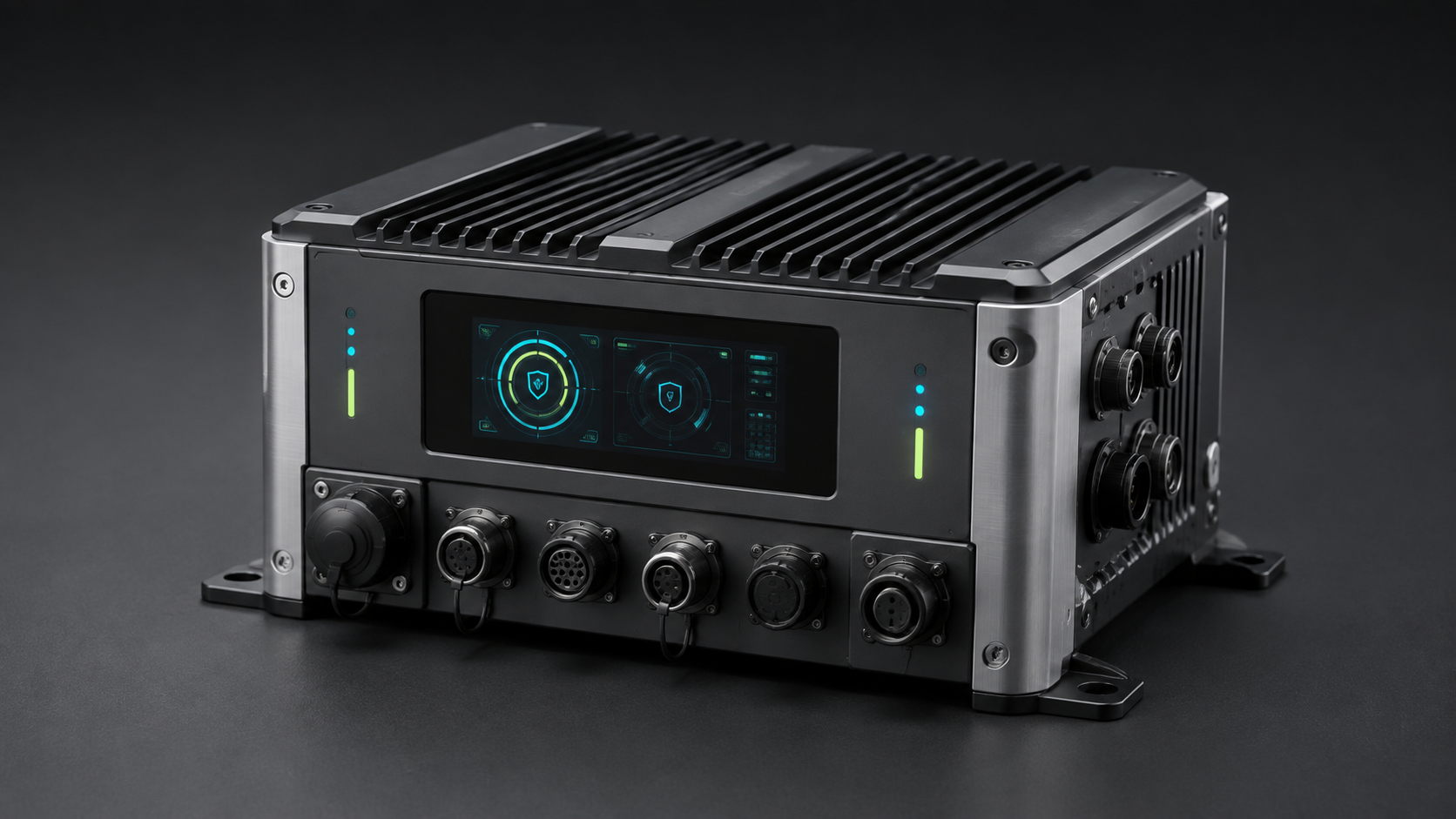
A computer built for the power system—not added afterward.
The enclosed IoT computer runs a proprietary edge-control operating environment. It translates sensor evidence into deterministic operating states, supervises startup and shutdown, coordinates lighting demand, records health and maintenance events, and isolates unsafe conditions.
Public behavior only. Source code, state-transition thresholds, GPIO mappings, signing materials, and security implementation remain confidential.
04 · Connected lighting
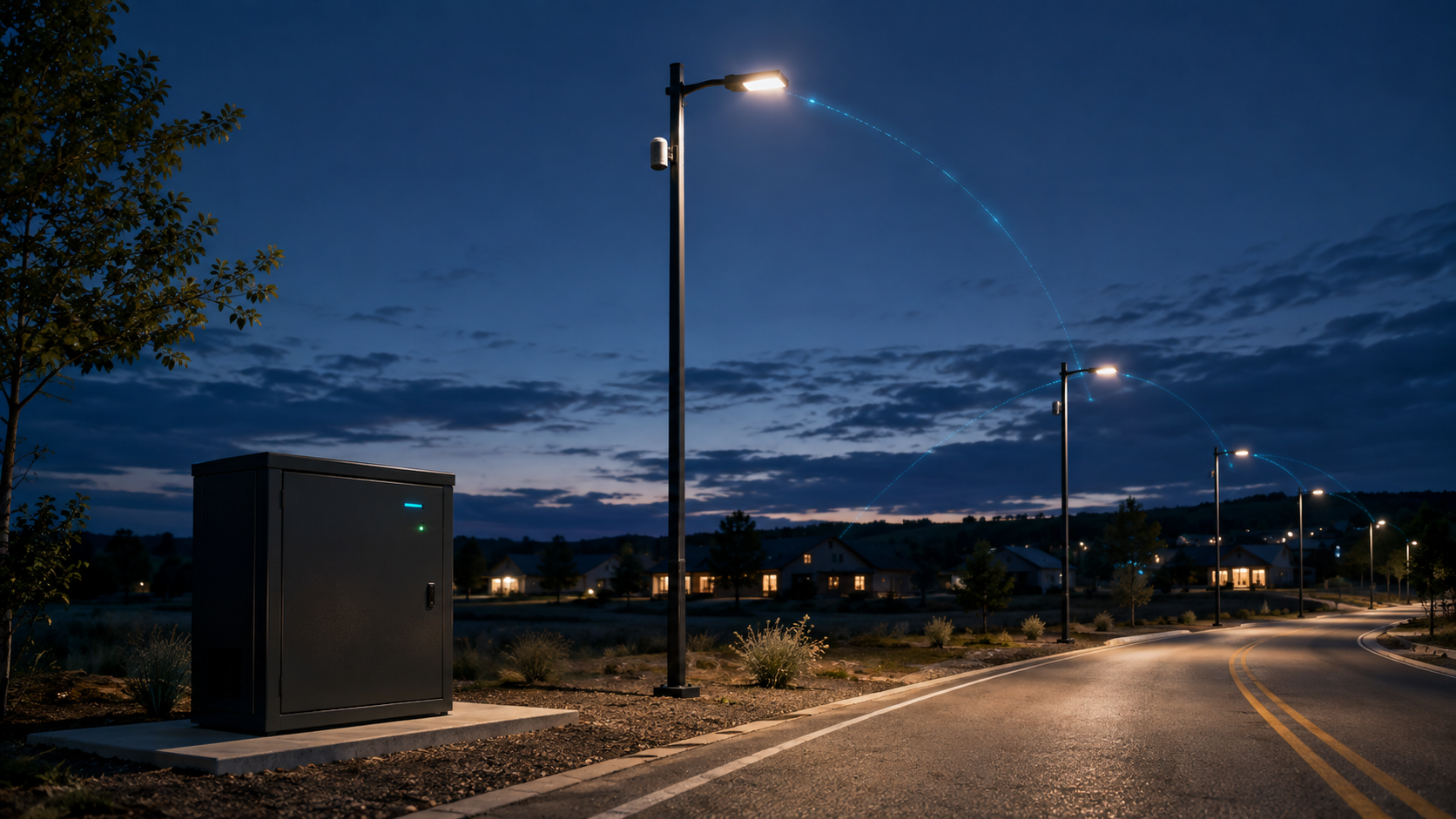
Dusk-to-dawn operation, coordinated at the edge.
Each lighting node evaluates local ambient-light evidence, health state, and authorized control policy. Neighboring nodes can exchange low-bandwidth status over a low-power Bluetooth mesh so a chain of lights can coordinate without depending on continuous cloud access.
- Dusk and dawn sensing with time-based confirmation
- Local autonomous operation during connectivity loss
- Health, voltage, runtime, and tamper telemetry
- Controlled propagation of signed state changes
- Fail-safe isolation of a degraded node
05 · Security architecture
EPOCHSHIELD is Magna Power Innovations Corporation's proprietary, evidence-driven security architecture for connected control. It is designed so deterministic policy—not an AI model or an unverified network message—remains authoritative.
The research roadmap is cryptographically agile and quantum-ready: future post-quantum and emerging-compute trust adapters can be introduced without allowing a new computing technology to bypass evidence normalization, provenance checks, confidence evaluation, or deterministic enforcement.
05Deterministic enforcementOnly approved states reach the physical controller
04Policy decisionRules remain authoritative and auditable
03Evidence confidenceContradictions, freshness, and reliability evaluated
02Provenance validationDevice identity and message origin checked
01Protected transportAuthenticated low-power communications
“Quantum-ready” describes architectural adaptability and research direction. It is not a claim of deployed quantum communications or independent post-quantum certification.
Technical collaboration